Medical Laser Micromachining
Ultra-Precision Laser Cutting & Drilling for Implants, Diagnostics, and Surgical Instruments
Precision Laser Cutting for Medical Devices
Laserod’s precision laser cutting is trusted for the most demanding medical applications, such as implantable devices to diagnostic and interventional systems. Our AS9100 and ISO 9001 certified quality system, and consistency with ISO 13485, provide the foundation for the same rigor, traceability, and process discipline expected in regulated medical manufacturing. Every part is produced with micron-level accuracy, clean edges, and validated repeatability, ensuring components meet tight tolerance requirements with the highest standards of performance and reliability.
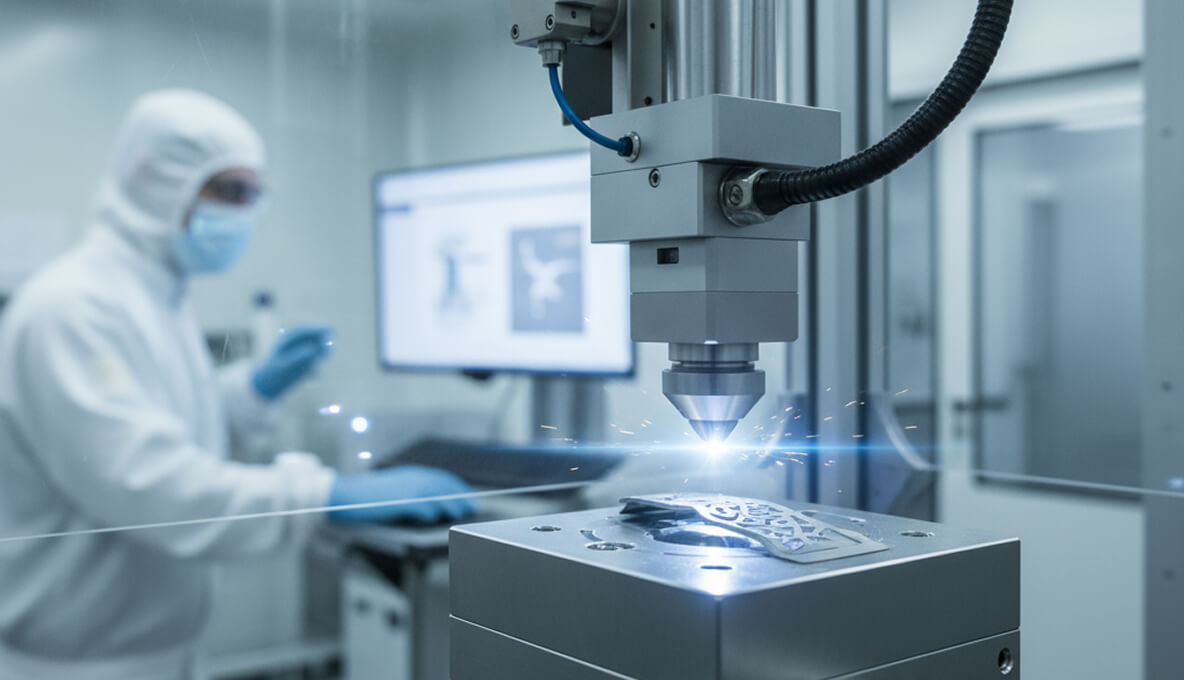
Medical Laser Cutting and Marking Services
Ultrafast, Non-Thermal Cutting
Femtosecond and picosecond processing to protect biocompatibility and eliminate heat-affected zones in metals, polymers, and ceramics.
Thin-Film & Foil Micro Cutting
Ultra-fine kerfs of 5-10ums in 316L, Nitinol, titanium, platinum-iridium, and specialty foils for micro-mechanisms and implant features.
Microfluidic & Lab-on-Chip Patterning
Thin-film and substrate cutting for channels, inlet/outlet ports, and cartridge interfaces.
Polymer & Bio-Compatible Materials
Clean cutting of PEEK, PTFE, polyimide, Pebax, and medical-grade laminates without burrs or melting.
Tube Cutting & Slotting
Precision cuts, windows, and slots in hypotubes and micro-tubing with tight edge quality for device integration.
Complex Geometry & Microfeatures
High density apertures, lattice features, and fine contours for compact device architectures and wearables.
Scoring/Slitting
Controlled depth features for compliance tuning and precise fluid paths in thin polymer films.
Multi-Layer & Coated Structures
Cutting of bonded stacks, coated wires, and composite laminates without delamination.
UDI & Permanent Marking
High-contrast DataMatrix/QR serialization on metals and polymers for full lifecycle traceability.
Laser Drilling Engineered for Advanced Medical Devices
Laserod’s precision laser drilling is trusted for the most demanding medical applications, such as implantable devices to diagnostic and interventional systems. Our AS9100 and ISO 9001 certified quality system, and consistency with ISO 13485, provide the foundation for the same rigor, traceability, and process discipline expected in regulated medical manufacturing. Using non-thermal femtosecond and picosecond processing, we deliver burr-free micro-holes with micron-level accuracy and validated repeatability, ensuring every component meets tight tolerance requirements with the highest standards of performance and reliability.
Medical Laser Hole Drilling Services
Burr-Free Micro Drilling
Clean entry/exit and smooth walls that reduce finishing and contamination risk on implantable and instrument components.
High-Aspect-Ratio Holes
Sub-25um diameter holes with aspect ratios exceeding 20:1 for dosing, venting, and precision fluid control.
Flow-Calibrated Orifices
Tight diameter control and verification in Nitinol, titanium, PEEK, ceramics, sapphire, and glass for drug delivery and micro-spray systems.
Ceramic/Glass Feedthrough Vias
Precision vias in alumina, glass, and sapphire for hermetic packages, headers, and sensor modules.
Electrode & Instrument Irrigation Ports
Micro-holes in tips and end effectors for irrigation, cooling, and suction control without burrs.
Microfluidic Access Vias
Clean inlet/outlet and vent holes in glass, silicon, and polymer chips for lab-on-a-chip and diagnostics.
Depth-Controlled Blind Vias
Tight depth control for metering features, flow restrictors, and valve seats in thin foils and laminates.
Tube & Catheter Hole Drilling
Consistent port placement in polymer and metal tubing (e.g., PEEK, PTFE, polyimide, hypotubes) with ±5um positional accuracy.
Shaped, Stepped, & Taper-Controlled Holes
Custom geometries to tune atomization, flow resistance, and integration features.
Multi-Material & Coated Substrates
Drilling through stacks, coatings, and delicate films without delamination or mechanical stress.
Array & Pattern Drilling
High repeatability micro perforation for membranes, filters, and diagnostic cartridges.
Capabilities
Laser Types
Femtosecond
1028nm / 514nm / 343nm Wavelengths
Picosecond
1064nm / 532nm / 355nm Wavelengths
Nanosecond
1064nm / 532nm / 355nm Wavelengths
Materials
- Stainless Steel
- Tantalum
- Silicone
- Titanium
- PEEK
- Nitinol
- PTFE
- Cobalt-Chromium
- Polyimide
- Platinum-Iridium
- Pebax
Specs
- Substrate Size: Up to 700mm x 700mm
- Substrate Thickness: Up to 3mm
- Kerf Width: Down to 10ums
- Hole Diameter: Down to 5ums
- Feature Registration: +/-5ums
Need A Sample?
Every project is unique, but we are confident we can make it work. Send us material and a drawing and we will produce a sample for you.
Looking For More Info?
Most projects we work on are custom. If you’re looking for more information about how Laserod can help with your project, our sales and engineering team are here to assist you.
Key Applications – Medical Laser Cutting & Drilling
Catheter Ports, Side-Holes & Slotting
±5 µm placement in PEEK/PTFE/polyimide hypotubes with smooth edges for controlled flow and multi-lumen alignment.
Implantable Device Micromachining
Feedthrough apertures, suture holes, and housing features in titanium, Co-Cr, alumina, and sapphire.
MEMS & Biomedical Microstructures
Precision vias, apertures, and optical/windows in silicon, glass, and sapphire for miniaturized devices.
Microfluidic Chips & Cartridges
Channel outlines, inlet/outlet vias, and membrane interfaces in glass, silicon, and polymers with leak-tight, clean edges.
Surgical Instrument Microfeatures
Thin-foil blades, distal tips, and irrigation/aspiration ports with burr-free edges and uniform surface quality.
Polymer Tube Processing
Clean cutting and slotting of medical grade polymers and laminates without melting, char, or delamination.
Biosensor Substrates & Electrodes
Thin-film metal patterning and isolation cuts on flexible polymers for wearables, leads, and diagnostic sensors.
Drug-Delivery Membranes & Micro-Nozzles
Sub-25 µm, taper controlled orifices and graded perforation arrays for dosing, atomization, and diffusion.
Aerosol & Inhaler Spray Nozzles
Uniform, burr-free micro-holes with verified diameter control for consistent spray patterns and flow.
Hypotube Windowing & Spiral Cuts
Precision windows, spirals, and skives in stainless and Nitinol shafts for flexibility and device integration.
Advantages of Laser Processing
Laser micromachining including both precision laser cutting and laser hole drilling delivers decisive advantages for medical devices. Ultrafast, non-thermal processing protects biocompatibility and coatings while achieving micron-level accuracy, enabling miniaturization, thin-wall features, and multilayer constructions.

Precision and Accuracy
Laser processes provide tight control over feature size, geometry, and placement. For drilling, this means sub-25 µm diameters, controlled depth, and ±5–10um positional accuracy. For cutting, it enables micron-accurate edges and fine contours on thin foils and tubes, which is ideal for dosing/venting orifices, catheter ports, stent features, and microfluidic interfaces.

Non-contact Processing
Non-contact energy delivery eliminates tool wear and mechanical loading, reducing risk of microcracks, delamination, smearing, or deformation in delicate medical substrates (e.g., PEEK, PTFE, polyimide, Nitinol, 316L, alumina, sapphire). The result is clean surfaces that help preserve material properties and downstream biocompatibility.

Versatility
A single laser platform produces through-holes, blind vias, slots, apertures, and complex cut paths across metals, high performance polymers, glasses, and technical ceramics without physical tool changes. Recipe driven switching supports mixed material, multilayer, and coated structures common in medical assemblies.

Speed
Femtosecond and picosecond sources with galvo scanning deliver short cycle times versus mechanical or EDM methods, minimize setup, and compress design-to-sample timelines. This is ideal for supporting rapid prototyping, short-run builds, and scalable production.

Flexibility in Design
CAD-driven execution removes conventional tooling limits, to allow for round, slotted, tapered, stepped, or non-circular holes; straight, curved, or highly intricate cut paths, which enables compact device layouts, graded porosity, and integrated microfluidic networks.

Minimal Material Waste
Ultra-narrow kerfs of 5–10ums, minimal burrs, and tightly controlled HAZ reduce scrap, rework, and particulate generation, which is critical for costly alloys and brittle optics. Smooth walls and clean edges lower finishing steps and contamination risk.

Quality and Consistency
Digitally controlled parameters and in-line vision delivers tight dimensional repeatability and uniform processing part-to-part and lot-to-lot.

Reduced Chemical Usage
Laser micromachining can replace etching and wet processes, enabling dry, cleanroom-compatible fabrication that reduces reliance on aggressive chemicals and supports environmental and sterility protocols.